
Managing Stress in Volatile Crypto Markets: How to Stay Emotionally Grounded

Volatility exposes the gap between your trading plan and your nervous system. Bridging that gap is a skill set you can practice, measure, and improve. Below is a practitioner’s guide I’ve used with high-intensity teams and retail traders alike. You’ll learn a repeatable system to steady your emotions during chaos, with concrete routines, checklists, and safeguards that work in real time.
Why Stress Spikes So Hard In Crypto
Crypto’s 24/7 markets compress what happens over weeks in equities into hours. Liquidity thins, narratives shift fast, and social feeds amp up urgency. Your brain prioritizes speed over accuracy when stakes feel high. Without structure, that means chasing candles, tightening stops at the worst moment, and entering a spiral of loss and overtrading. If you’ve felt that pull, you’re not broken. You’re human.

The antidote is a pre-committed set of behaviors that take minimal willpower when the tape heats up. We’ll layer those behaviors across planning, execution, and post-trade review, with habits that protect your attention from fear, uncertainty, and doubt. If you recognize you’re slipping into retaliatory behaviors after a red trade, start by learning how to break revenge trading patterns right away.
What “Grounded” Looks Like Under Stress
- Clarity: Your risk per trade and invalidation level are known in advance. No renegotiating at market.
- Consistent routine: One morning and one evening check-in. No ad hoc system changes during drawdowns.
- Bounded attention: Feeds and news are scoped. You decide when to look, not the algorithm.
- Recovery plan: You can pause, reset, and step back if you detect compulsion. If you need deeper support, read about recovery from trading addiction.
The 3-Layer Grounding Framework
This is the operating system I recommend to traders who want durable calm in fast markets.
Layer 1 – Pre-Market Boundary Setting
- Define risk budget: Daily loss limit and per-trade risk in actual currency. If either hits, you stop trading for the session.
- Trade templates: Predefined setups with entry criteria, invalidation, and target. If a setup isn’t on the card, it’s not a trade.
- Information diet: Choose 1-2 primary data sources for macro and 1-2 for on-chain or market structure. Anything else during the session is deferred. When hype spikes, learn to manage FUD with a checklist rather than engaging the noise.
Layer 2 – In-Session Execution Discipline
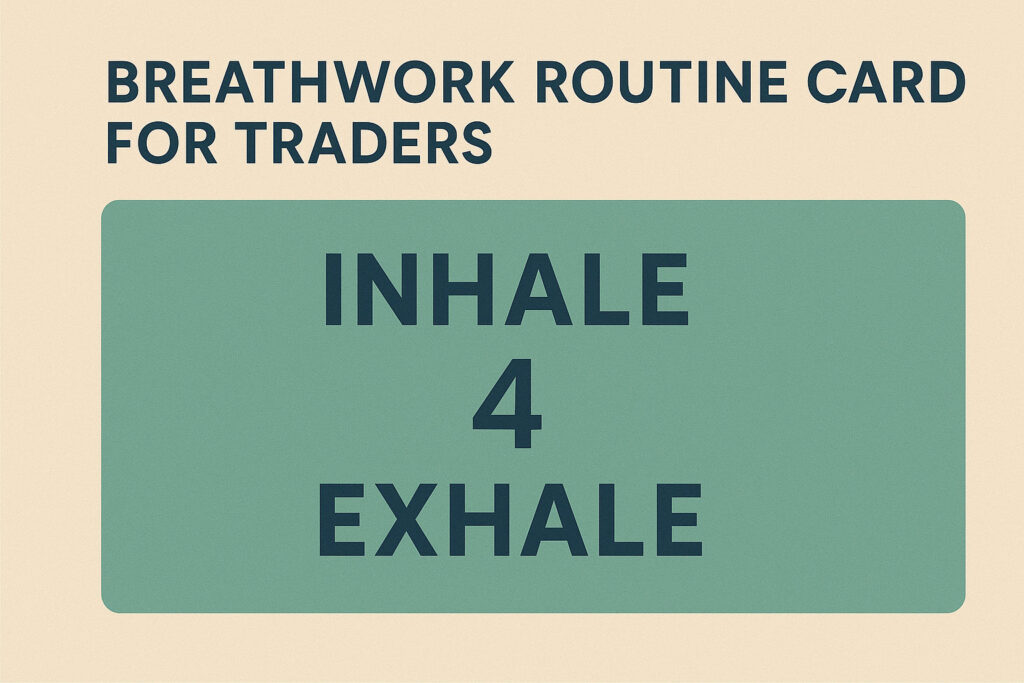
- Breathing protocol at decision points: 4 seconds inhale – 6 seconds exhale, 3 rounds, especially after fills and stops.
- Timeboxing: 25 minute focused blocks followed by 5 minutes away from screens. Reset posture and eyes. Hydrate.
- One-click safety: Preconfigure a hotkey to flatten positions if rules are broken or emotions spike. No debate.
Layer 3 – Post-Session Review and Reset
- Journal the 3 Ms: Market context, Method adherence, Mind state. Then write one action you’ll test tomorrow. If you haven’t been logging consistently, add to your crypto journal today and start with a single high-signal metric like “rule adherence score”.
- Decompression routine: 15-30 minutes of movement or breath work to clear sympathetic activation.
- Weekly audit: Update your system notes, not just your PnL. This is how you build a long term mindset that survives regimes.
Stress-Management Techniques Compared
Below is a field-tested view of what works when volatility spikes. Stars reflect practical effectiveness in live trading environments, not ideal conditions.
| Technique | Best Use Case | Time To Implement | Research Support | Practical Rating |
|---|---|---|---|---|
| Box Breathing (4-4-4-4) | Acute nerves before entries, after stops | 2 minutes | Strong for autonomic calming | ★★★★☆ |
| Pre-commit Loss Limits | Prevent tilt after early losses | 10 minutes setup in platform | Strong in behavioral finance literature | ★★★★★ |
| Stimulus Control – Social Feed Curfew | Reduce FOMO and rumor chasing | Immediate | Moderate – attention science | ★★★★☆ |
| Post-Trade Journaling | Capture errors and wins for iteration | 5-10 minutes per session | Moderate to strong – skill acquisition | ★★★★☆ |
| 10-Min Walk After Sessions | Flush stress hormones, reset arousal | 10 minutes | Strong – exercise and cognition | ★★★★☆ |
| Hotkey Panic Flatten | Break cascading rule violations | 5 minutes to configure | Strong – implementation intentions | ★★★★★ |
Research references: breath techniques for autonomic regulation, implementation intentions for behavior change, and exercise for stress recovery are consistently supported in peer-reviewed psychology and neuroscience. These are cited by name in academic summaries from organizations like the American Psychological Association, the National Institute for Health and Care Excellence, and leading behavioral finance texts.
Detecting Emotional Drift In Real Time
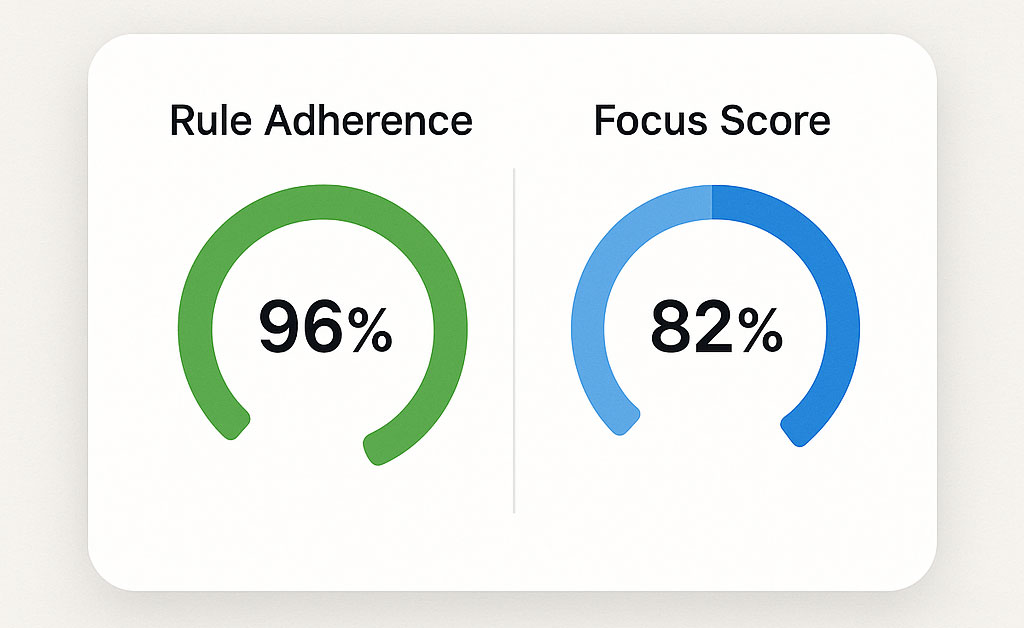
You cannot manage what you don’t measure. During live sessions, rate each hour on a 1-5 scale for three variables: focus, rule adherence, and urge to chase. If any two drop to 2 or below, you initiate the reset protocol: stand up, breathe 3 rounds, drink water, and close feeds. You do not open a new position for at least 10 minutes. Compulsion fades when the stimulus loses immediacy. If you feel the push to “make it back” after a stop-out, revisit how to break revenge trading patterns before you click again.
Build A Long-Range Edge That Outlasts Volatility
Survivorship belongs to traders who optimize for decades, not days. That changes your goals: fewer hero trades, more system compounding. The simplest rule I give newer traders is this: at least one action in every session should serve your future self. That might be tightening your process doc, or reinforcing your long term mindset with a one-sentence lesson you’ll act on next week.
Handling FUD And Narrative Whiplash
Headlines will always outpace facts in crypto. When narratives flip, you need a FUD gate. Here’s the one I use:
- Source triage: Is the information primary, secondary, or just commentary. Primary sources get priority. Otherwise, defer.
- Price-action filter: Has structure actually changed on your timeframe. If not, do nothing.
- Risk recalibration: If structure breaks, adjust size within the plan. If it doesn’t, do nothing. This is how you manage FUD without losing your edge.
Social Media Without The Adrenaline Tax
Social algorithms reward outrage and urgency – the exact states that degrade trading. Use “scheduled batch windows”: two short windows per day to review a curated list. Mute or unfollow anything that alters your plan mid-session. Consider a weekly review of your follows to reduce stimulus drift. For a deeper look at the behavioral traps here, study our guide on social media influence and how to build a deliberate filter.
Health – The Overlooked PnL Multiplier
Traders often optimize screens and ignore sleep, movement, and nutrition. That is like tuning a race car and ignoring the engine oil. Sleep restriction impairs risk judgments, reaction time, and working memory. Short walks improve executive control and mood. Hydration impacts vigilance. If your performance swings with your energy, you need a health baseline: 7-8 hours sleep, daily movement, and consistent meals. To connect the dots between physiology and decision quality, read how health impacts performance and implement at least one change this week.
Your Personal Anti-Volatility Playbook
Copy this into your notes and check it before you trade.
- Today’s risk budget: Max daily loss = [£ or $ amount]. Max per trade risk = [amount]. If hit, stop trading.
- My setups in play: [Setup A], [Setup B]. If price action doesn’t match, I pass.
- Environmental check: Caffeine, sleep, stress level, distractions. If 2 or more are sub-par, halve size or stay flat.
- Social rule: No feeds during active management. Summary check only at top of hour.
- Reset triggers: Two rule breaks, urge to chase, or loss of context. Activate breathing and walk protocol.
- Journal prompt: One sentence I would teach my past self from today.
Process Metrics That Matter
Good traders measure what they can control, not just outcomes they cannot. Here are five process metrics I’ve seen correlate with stability:
- Rule adherence score: Percentage of trades executed as per template.
- Context recall: Can you describe the market structure on your timeframe without looking. Yes or no.
- Chase-urge count: Number of times you felt compelled to enter outside plan. Goal is fewer over time.
- Decision latency: Time between signal and execution within planned window. Avoid knee-jerk fills.
- Decompression compliance: Did you complete post-session reset. Yes or no.
Pros and Cons of Popular Stress Tools
| Tool | Pros | Cons |
|---|---|---|
| Breathing Protocols | Fast to apply, portable, reduces heart rate quickly | Easy to skip when you most need it |
| Trading Journal | Compounds learning, surfaces patterns, accountability | Benefits lag if you don’t review weekly – start by adding to your crypto journal today |
| Loss Limits | Stops bleed and tilt, preserves capital | Painful to honor at first, requires pre-commitment |
| Feed Curfew | Removes FOMO triggers and rumor volatility | Hard if your social circle trades live together |
| Weekly System Review | Builds a long term mindset, improves edge | Work without immediate dopamine – schedule it |
When You’re In A Drawdown
Drawdowns test identity and patience. Here is the triage plan:
- Stop the bleed: Trade half size or go flat for 3 sessions.
- System quarantine: Freeze all changes to rules. You will only make edits after a calm weekly review.
- Post-mortem: Categorize losses by rule breaks vs. variance. If rule breaks dominate, the issue is behavior, not edge.
- Support: If compulsion or secrecy is rising, read our guidance on recovery from trading addiction and seek professional help if needed.
Case Study – The 3-Week Reset
One trader came in with a 14 percent drawdown in 5 days, driven by impulse entries during overnight sessions. We implemented the 3-layer framework plus a hard social curfew. He limited sessions to his time zone, enabled a hotkey to flatten positions, and moved to a daily loss limit he actually respected. Journaling was simplified to 3 bullet points per day. Within 3 weeks, rule adherence rose from 46 percent to 88 percent, win rate stabilized, and most importantly, the feeling of compulsive pressure disappeared. The compounding effect was not a new indicator – it was attention discipline and routine.
Preventing Social Contagion In Your PnL
Signals from others are not your edge. Your system should filter them. If a feed forces timeframes you don’t trade, mute it. If an influencer’s urgency pulls you off plan, unfollow or move them to a weekly review list. Revisit our breakdown of social media influence to design your own filter list.
From Short-Term Thrill To Long-Term Mastery
Professionalism is boring in the best way. You steadily execute, review, and refine. Boredom is a feature, not a bug. Mastery compounds when your identity shifts from “I need to win today” to “I protect and express an edge over thousands of trades.” If you want help building that identity, study what separates amateurs from pros in our guide to the long term mindset.
Health Routines That Pay Dividends
- Sleep anchors: Same bedtime and wake time on trading days. Protect REM for decision quality. See how health impacts performance with simple changes first.
- Move daily: 20-30 minutes low intensity after sessions. It’s the fastest cost-effective reset.
- Fuel and hydrate: Stable glucose, steady energy. Avoid rapid swings that mimic volatility in your body.
- Social hygiene: One non-trading conversation daily to keep perspective. Markets are not your whole world.
Starter Checklist – Print This
- Write your daily loss limit and tape it beside your screen.
- Configure a hotkey to flatten positions instantly.
- Create 2 trade templates with clear invalidation levels.
- Set two 10-minute social windows per day and block feeds otherwise.
- Journal the 3 Ms post-session. If you need a simple place to start, add to your crypto journal today.
Managing Emotions In Volatile Markets FAQs
Interrupt the loop physically and procedurally. Stand up, breathe, and step away for 10 minutes. Then review your loss limit and trade plan. If urges persist, do not trade that session. For structured steps, start with our guide to break revenge trading patterns.
No. Your system should define your information windows. Constant exposure elevates arousal and compresses your time horizon. Learn to control social media influence rather than letting it control you.
Breathing protocols and a one-sentence checklist work best in live fire. Inhale 4 – exhale 6 for three rounds, then confirm entry, risk, invalidation, and target. If any element is missing, you pass on the trade.
Sleep and movement directly influence risk perception and working memory. Traders who anchor sleep and post-session walks report fewer impulse trades and better adherence. If you want to operationalize it, review how health impacts performance and choose one habit to enact this week.
Adopt a compounding process lens. Focus on consistency and decision quality more than immediate PnL. Perform a weekly review, update your process doc, and refine checklists. That is the essence of a long term mindset.
Final Word – Your Edge Is Calm
In volatile markets, the rare edge is not a secret indicator – it’s composure under pressure. Build it like a skill. Protect your attention. Honor your risk limits. Journal honestly. Optimize your health. And when the storm hits, remember: you can’t control volatility, but you can control your process. Start today by capturing one insight in your log – then act on it next session.

please consider sharing!: