
Revenge Trading in Crypto: How to Break the Cycle of Emotional Losses
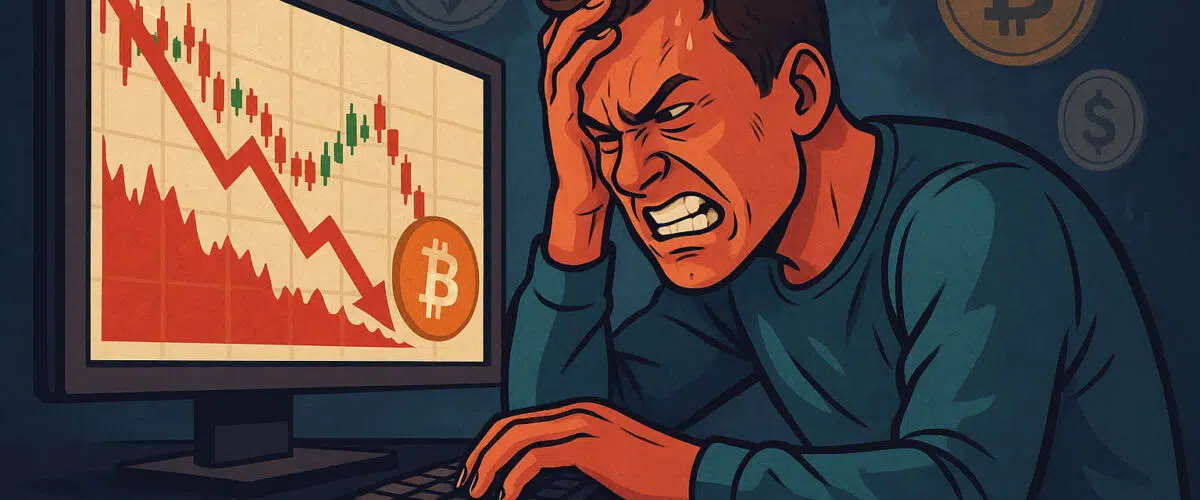
Revenge trading is the emotional impulse to win back recent losses by taking new trades that don’t meet your plan. In crypto – where price can rip 10 percent in minutes – it’s particularly destructive. You over-size, you shorten your holding period, you move stops, you add to losers. The common end state is the same: a busted day turns into a busted week. This guide breaks the cycle with a practical, operations-style playbook you can deploy today, plus checklists, tables, and a journaling protocol you can copy into your workflow.
If you’ve ever blown through your rules after a painful wick-out, you already know the triggers. But knowing is not doing. We’re going to connect the dots between the cognitive biases when trading crypto and the exact interventions that prevent a single bad beat from snowballing into system-wide damage.
What Exactly Is Revenge Trading?
Revenge trading is loss-chasing. After a negative outcome, you unconsciously switch goals from following your system to restoring your ego and PnL. The danger is that you stop operating as a risk manager and become a gambler trying to “get back to even.” In crypto, microstructure quirks like thin weekend books and funding-driven squeezes amplify this impulse. The best antidote is to slow the loop and re-commit to process over PnL.
Two beliefs fuel the spiral: “the market owes me” and “I was right, just early.” Both are stories. Neither changes the expected value of the next trade. If you routinely hold losers hoping to spring back, revisit the psychology behind hodling to separate conviction from stubbornness.
Spot the Early Warning Signs
- Instant re-entry in the same coin after a stop-out, with worse location and larger size.
- Lower timeframes than your plan to “find” entries that justify action.
- Moving stops further away or removing them entirely.
- Switching from uncorrelated setups to the single coin that just hurt you.
- Compulsively checking PnL instead of charts or your checklist.
Underneath these behaviors are classic distortions like loss aversion, sunk cost fallacy, and confirmation bias. Brush up on the patterns in cognitive biases when trading crypto and you’ll start catching yourself mid-spiral.

The Trigger Chain: From FOMO to Herding
Revenge trading often piggybacks on hype. A sharp move candles your stop. Twitter is euphoric. You feel left behind and suddenly you’re trading the timeline instead of your edge. This is the same engine that drives trading based on fomo and the social pressure that leads to copycat entries. Your defense is to disarm social proof and reduce noise, because crowd emotion is contagious. If you struggle to mute the chorus, revisit the primer on how to avoid herd mentality and re-center on your own stats.
A Practical Cool-Down Framework (10 Minutes)
Run this immediately after any significant loss or rule break. Treat it like incident response, not therapy.
- Lock Controls (2 minutes): Flatten, cancel all open orders, and set a cool-down timer for 20 – 60 minutes. Disable hotkeys. You can still analyze, but you cannot trade.
- Post-Trade Triage (3 minutes): Log three facts only: setup name, rule violated, and exact trigger (e.g., “moved stop after wick”). Keep emotion out. If you need a structure, use the checklist in manage emotions.
- Mechanism Rebuild (3 minutes): For each rule you broke, write one constraint you’ll add for the next 5 sessions. Example: “Two consecutive losses in the same pair triggers mandatory symbol switch.”
- Re-entry Gate (2 minutes): Define the only condition under which you are allowed to resume: “After 20 minutes + a fresh A-grade setup that matches my playbook, with half size.”
When you finish, put the notes into your journal. A structured record makes it far easier to see patterns over time, especially if you log in your crypto mental log journal after each session and tag the entry with #revenge and the coin.
Comparison Table: Revenge Mode vs. Recovery Mode
| Dimension | Revenge Mode | Recovery Mode |
|---|---|---|
| Objective | Get losses back now | Execute process perfectly |
| Timeframe | Shortened impulsively | Aligned to system baseline |
| Risk | Increased size, removed stops | Reduced size, pre-committed stops |
| Information | Social feeds, noise | Playbook and journal metrics |
| State | Agitated, outcome-focused | Calm, checklist-focused |
Playbook: 7 Anti-Revenge Rules You Can Implement Today
Below are rules I’ve seen work across dozens of discretionary systems. Treat them as templates – adapt to your edge and platform.
- Two-Strike Symbol Rule: Two losses in the same pair in one session means you switch symbols. This breaks the fixation loop that fuels revenge entries.
- Throttle Re-Entry: You may not re-enter a symbol within 15 minutes of a stop-out unless a higher timeframe signal appears that fully resets the setup.
- Half-Size After Loss: Next trade size is capped at 50 percent of normal until you book a green trade that meets plan criteria.
- Pre-Registered Stop: Stops must be OCO-attached at entry. Manual stops are banned during cool-down weeks.
- One Screen, One Feed: During recovery, close all but the execution chart. If FOMO is a persistent trigger, revisit trading based on fomo and remove real-time social feeds entirely for 5 sessions.
- Session Quota: Max 3 A-grade trades per session. Any B- or C-grade idea goes straight to the watchlist, not the order book.
- Mandatory Journal Tagging: Every loss gets a tag and a 140-character root-cause note. Then log in your crypto mental log journal and attach chart screenshots.
How Emotions Hijack Execution – And How To Respond
Most traders try to suppress emotion. That rarely works under stress. A better approach is to decode the emotion and route it into a simple protocol. If you struggle with rising anxiety during volatile sessions, embed a 90-second regulation loop from our stress toolbox in managing stress before you press any buttons.
- Anger: Signals a violated expectation. Response: flatten, 10 slow breaths, re-state the setup in writing. No new orders for 15 minutes.
- Fear: Signals uncertainty or overexposure. Response: reduce size, widen time horizon, review checklist, and confirm that the plan – not Twitter – is your trigger.
- Shame: Signals a self-image threat. Response: private post-mortem only. No social posting until next green, plan-compliant trade.
Protocol Ratings: What Works Best Against Revenge Trading?
These are practitioner-weighted difficulty and impact ratings to help prioritize. Use them as a planning aid, not universal truth.
| Intervention | Impact | Difficulty | Notes |
|---|---|---|---|
| 20 – 60 min cool-down timer | ★★★★★ | ★★☆☆☆ | Stops the feedback loop long enough for prefrontal control to return. |
| Half-size rule after loss | ★★★★☆ | ★★☆☆☆ | Reduces the amplitude of further drawdown while you recalibrate. |
| Two-strike symbol switch | ★★★★☆ | ★★★☆☆ | Breaks fixation and confirmation bias on a single narrative. |
| OCO stop enforcement | ★★★★★ | ★★★☆☆ | Turns discipline into configuration. Hard to “forget” a stop you must place to enter. |
| Noise reduction (social mute) | ★★★☆☆ | ★★★★☆ | Best combined with education on how to avoid herd mentality. |
Case Study: The Double-Top That Wrecked Tuesday
Set the scene: You’re long after a clean retest. A liquidation wick tags your stop by $3 and the pair rockets 4 percent without you. That sharp sting is the seed of revenge trading. What do you do?
- Freeze: Flatten emotion first. Stand up, 90 seconds of paced breathing.
- Rebuild: Note the rule you broke or the data you ignored. If it was crowd-driven, review the safeguards in trading based on fomo.
- Gate: Only re-enter if a fresh setup forms that matches your playbook, with half size and pre-attached stop.
- Journal: Capture chart images and a one-line lesson. Then immediately log in your crypto mental log journal so today’s pain becomes tomorrow’s protection.
When Holding Becomes Revenge by Another Name
Sometimes revenge trading doesn’t look like clicking re-entry. It looks like refusing to exit. You “hodl” through your invalidation because selling would crystallize a loss. That’s still revenge – a passive version. If this resonates, go deep on the psychology behind hodling and set a written policy: if the thesis breaks, you exit the trade and move the thesis to a watchlist, not your portfolio.
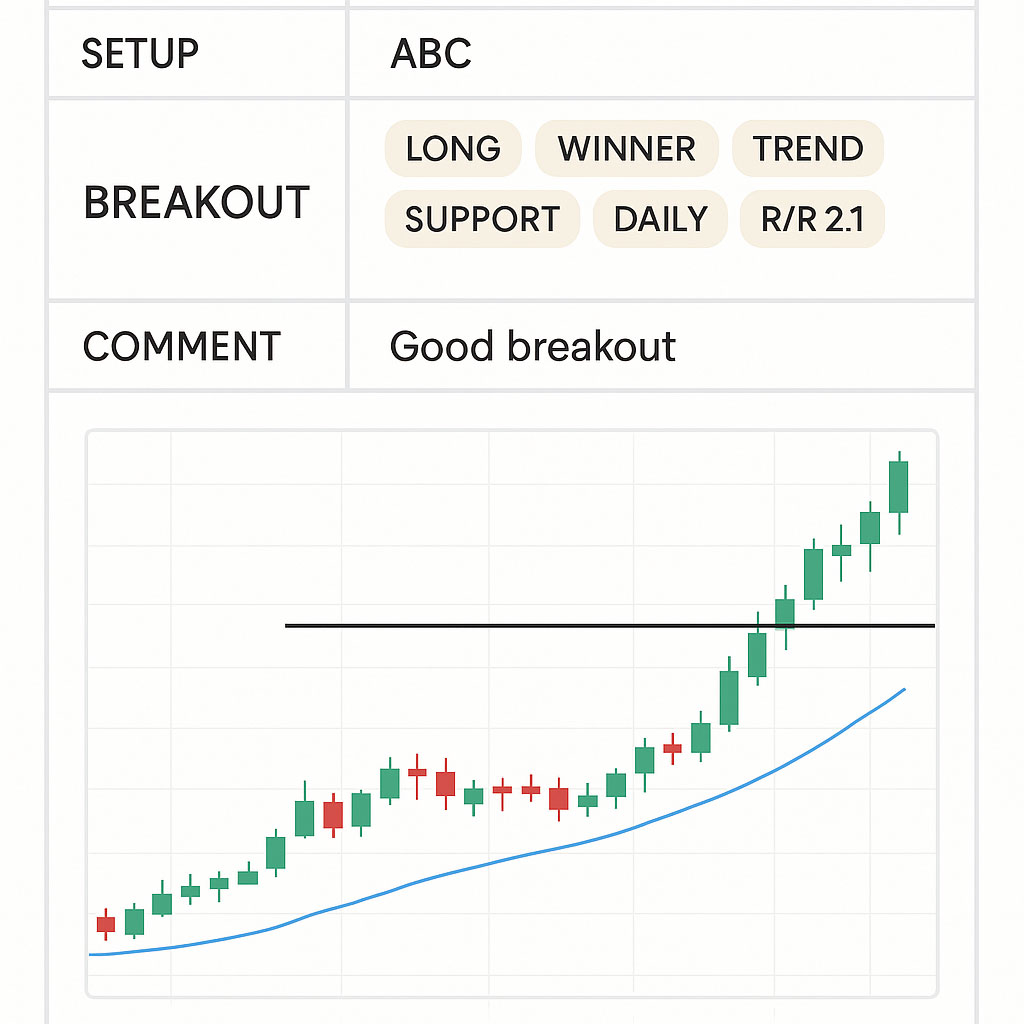
Your Anti-Revenge Checklist (Copy-Paste)
Print this, tape it under your monitor, and make it your new session open ritual.
- Did I define maximum trades and daily loss limit before opening the platform?
- Is every order OCO-attached with pre-committed size and stop?
- Have I muted or closed all non-essential feeds to reduce herd mentality risk?
- If I take two losses in a row on the same pair, do I switch symbols for the rest of the session?
- Have I set a 20 – 60 minute timer that starts automatically after any rule break?
- Will I write one sentence in my journal after every trade and tag it appropriately?
Build the Habit: A 5-Session Recovery Sprint
Habits beat willpower. Run this five-session sprint to reset your operating system:
- Session 1 – Baseline: Trade half size across the whole session. Journal after every trade. At day’s end, summarize three observations about when revenge impulses appeared. Use the templates in manage emotions to label the state correctly.
- Session 2 – Environment: Strip your desk. Only the execution chart and your checklist. If you catch yourself tabbing to social, revisit trading based on fomo.
- Session 3 – Limits: Enforce a max of three A-grade trades. If you hit the daily stop, shut it down. No “last one.”
- Session 4 – Accountability: Share the rules you broke and your new constraints with a trading partner. If you don’t have one, at minimum log in your crypto mental log journal and write a post-mortem.
- Session 5 – Reflection: Compare PnL variability, average R, and rule adherence vs Session 1. If adherence improved, scale size by 25 percent next week – not all at once.
Pros and Cons of Popular Anti-Revenge Tools
Automated Cool-Downs
- Pros: Removes discretion in the red zone. Simple to implement with platform hotkeys or scripts.
- Cons: Can feel restrictive if you genuinely have a new setup. The feeling is the point.
Strict Trade Quotas
- Pros: Forces patience and idea quality. Reduces churn.
- Cons: If set too low, may cause missed A-grade opportunities during volatile sessions.
Journal-First Workflow
- Pros: Creates an objective audit trail. Over time, patterns jump off the page. Pair with our guidance on manage emotions for maximum effect.
- Cons: Takes time and honesty. You need a ritual, not just a template.
Sidebar: Why Crowds Accelerate Loss-Chasing
Herd dynamics compress your reflection window. In bull phases, your timeline rewards speed and certainty – the opposite of recovery discipline. When you see consensus building, step away. Re-read the framework on how to avoid herd mentality and reinstate your time-based gate before any action.

Strengthen the Core: Education Beats Willpower
Most revenge spirals start with poor thesis hygiene, not just raw emotion. Review your playbook monthly and trim low-expectancy setups. If you find you’re frequently holding past invalidation, schedule a focused study block on the psychology behind hodling. If you keep chasing green candles that “got away,” revisit trading based on fomo and give yourself a one-week social detox. When in doubt, do less and log more – then log in your crypto mental log journal the specifics so you can see it in black and white.
Putting It All Together
Revenge trading is a process failure that looks like an emotional failure. Upgrade the process and your emotions calm down because you’ve reduced the number of on-ramps to bad behavior. Use time-based locks, size throttles, symbol switching, and a journaling gate to slow the loop. Use targeted education on manage emotions and crowd effects to keep your head when the market gets loud. Above all, make it boring: if your recovery mode feels quiet and methodical, you’re doing it right.
Break Revenge Trading in Crypto FAQs
Flatten first, then impose a 20 – 60 minute trading lock. While locked, write a three-line triage: setup name, violated rule, and trigger. Only resume at half size on the next A-grade setup with an OCO stop already attached.
Install a hard 15-minute re-entry timer and a two-strike symbol switch. You can still study, but you cannot click. If the urge is social-driven, re-read trading based on fomo and close feeds during market opens.
Yes – it’s a passive version. You’re trying to erase the loss by refusing to realize it. Refresh your rules using the psychology behind hodling playbook and make “thesis broken = exit” a written, non-negotiable line.
No. You earn it back by protecting your system. The rule after a daily stop is mandatory shutdown and an early review session. Tomorrow starts with half size and a single-symbol focus until you record two clean, plan-compliant trades.
Loss aversion looks like moving your stop. Confirmation bias looks like adding indicators until the chart says what you want. Sunk cost looks like re-entering a coin because “I’ve already spent time on it.” Counter them with pre-committed rules and refreshers on cognitive biases when trading crypto.
Absolutely. A calm nervous system is a competitive edge. Use 90-second breathing before any re-entry decision and build a simple routine from managing stress. The goal is a body that supports the plan, not one that overrides it.
Bottom Line
You won’t eliminate revenge impulses – you will out-engineer them. Treat every significant loss as an incident: lock controls, log facts, add one constraint, and resume only when your plan – not your PnL – says go. Then make the habit stick by journaling relentlessly. If you do nothing else today, set up your 20 – 60 minute cool-down and attach stops at entry. The rest of your discipline will start to click into place.
If you found this content helpful,please consider sharing!: